The steering angle sensor tells the stability control module how far and how quickly the driver is turning the wheel. That data is compared with wheel speed, yaw rate, and lateral acceleration to decide when to intervene with brake pressure or torque reduction. After suspension or steering work disturbs the sensor reference point, the module receives inaccurate angle readings — and the safety systems that depend on them behave unpredictably.
What the Steering Angle Sensor Actually Measures
Most modern vehicles mount the sensor inside the steering column or within the clock spring behind the airbag module. It tracks rotation relative to a zero point defined when the wheels are pointed straight ahead. The control module expects that zero to match the physical center of the steering rack and the alignment settings on the front wheels.
Even a few degrees of offset matter. Stability control calculates expected vehicle response based on commanded steering input. If the sensor reports ten degrees of turn when the wheels are straight, the module may detect a yaw mismatch and apply brakes at the wrong wheel during a normal lane change.
When Recalibration Becomes Mandatory
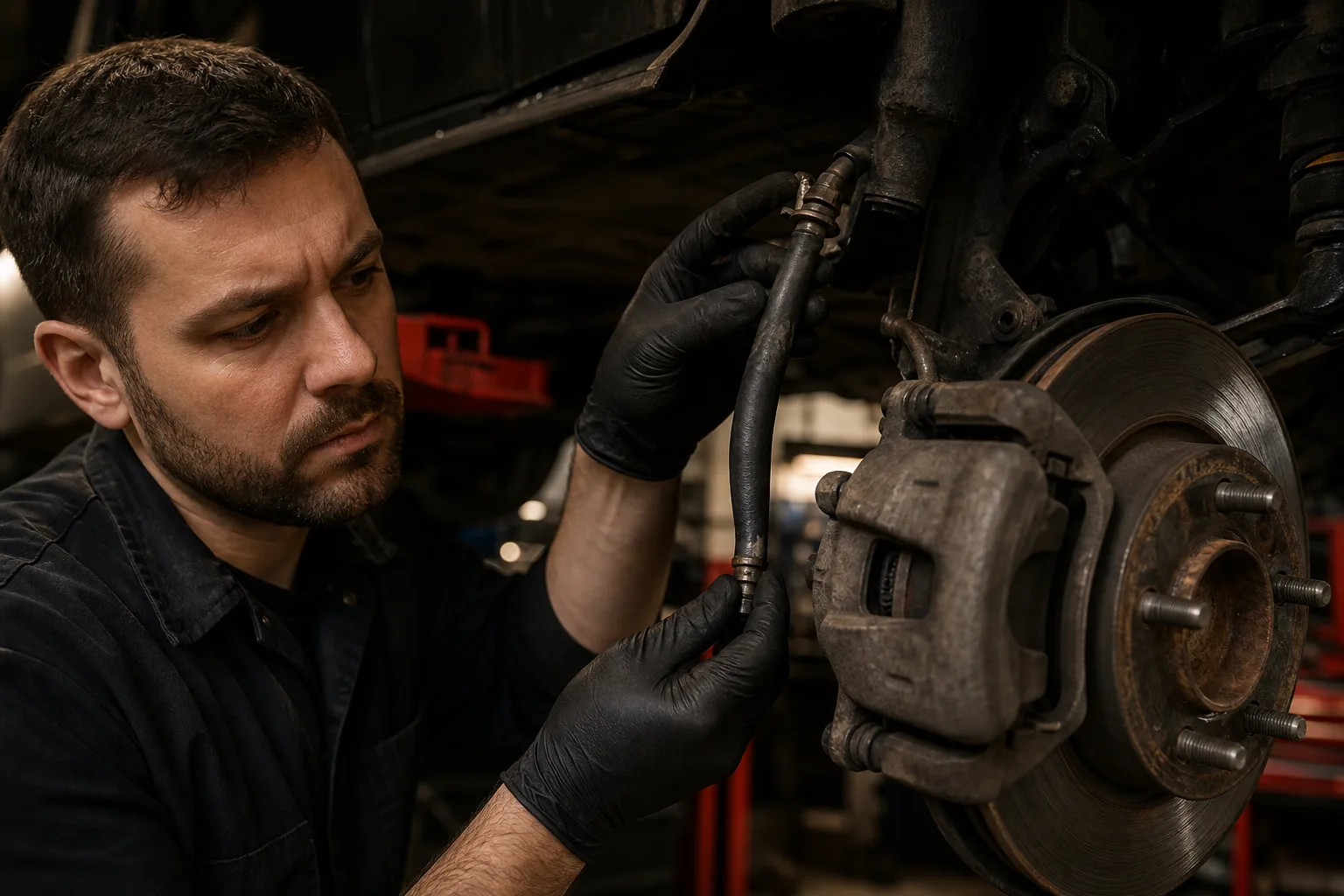
Any procedure that removes or repositions the sensor, clock spring, steering column, rack, or front suspension components can shift the zero reference. Recalibration is required after wheel alignment when toe was adjusted, after strut or control arm replacement, and after any repair that required disconnecting the battery with the wheels turned off center.
- Four-wheel alignment following collision repair or suspension component replacement
- Steering rack, column, or intermediate shaft removal or installation
- Clock spring replacement after airbag service
- Installation of an aftermarket steering wheel that changes rotation range
- Diagnostic trouble codes referencing steering angle sensor range, plausibility, or not calibrated
Some manufacturers require calibration even after a simple battery disconnect if the ignition was on with the wheels turned. Check service information for the specific model before assuming a test drive alone will clear the fault.
Warning Signs of an Uncalibrated or Drifting Sensor
Drivers may see the stability control or traction control warning lamp illuminate at startup or during gentle cornering. The steering wheel can appear off-center even when the vehicle tracks straight, because the sensor zero no longer matches the mechanical center of the rack. In some cases the module disables assist functions until calibration completes, leaving the vehicle without electronic stability protection.
Less obvious symptoms include premature tire wear on one front edge despite correct alignment angles, or adaptive headlight systems that aim incorrectly into oncoming traffic. Lane-keeping and parking assist features that rely on the same angle data may drift out of their intended lane or fail to center properly in a parking space.
Tools and Procedures Used in the Workshop
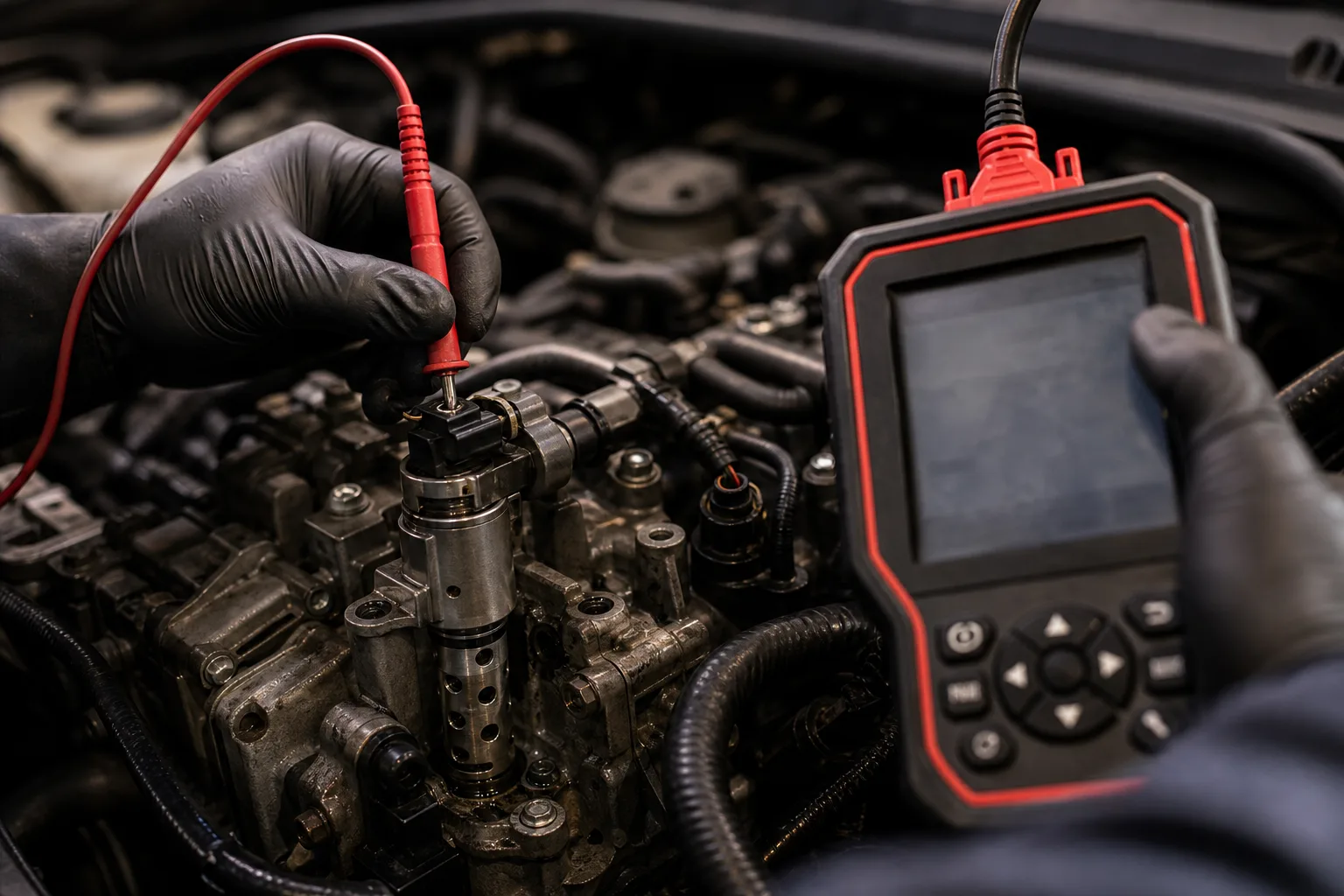
Calibration requires a scan tool with manufacturer-specific software or an equivalent aftermarket platform that supports steering angle sensor routines. The general procedure places the front wheels on a level surface, centers the steering wheel, and runs the zero-point learning sequence through the diagnostic menu. Some vehicles demand a drive cycle at specific speed afterward to confirm the new reference.
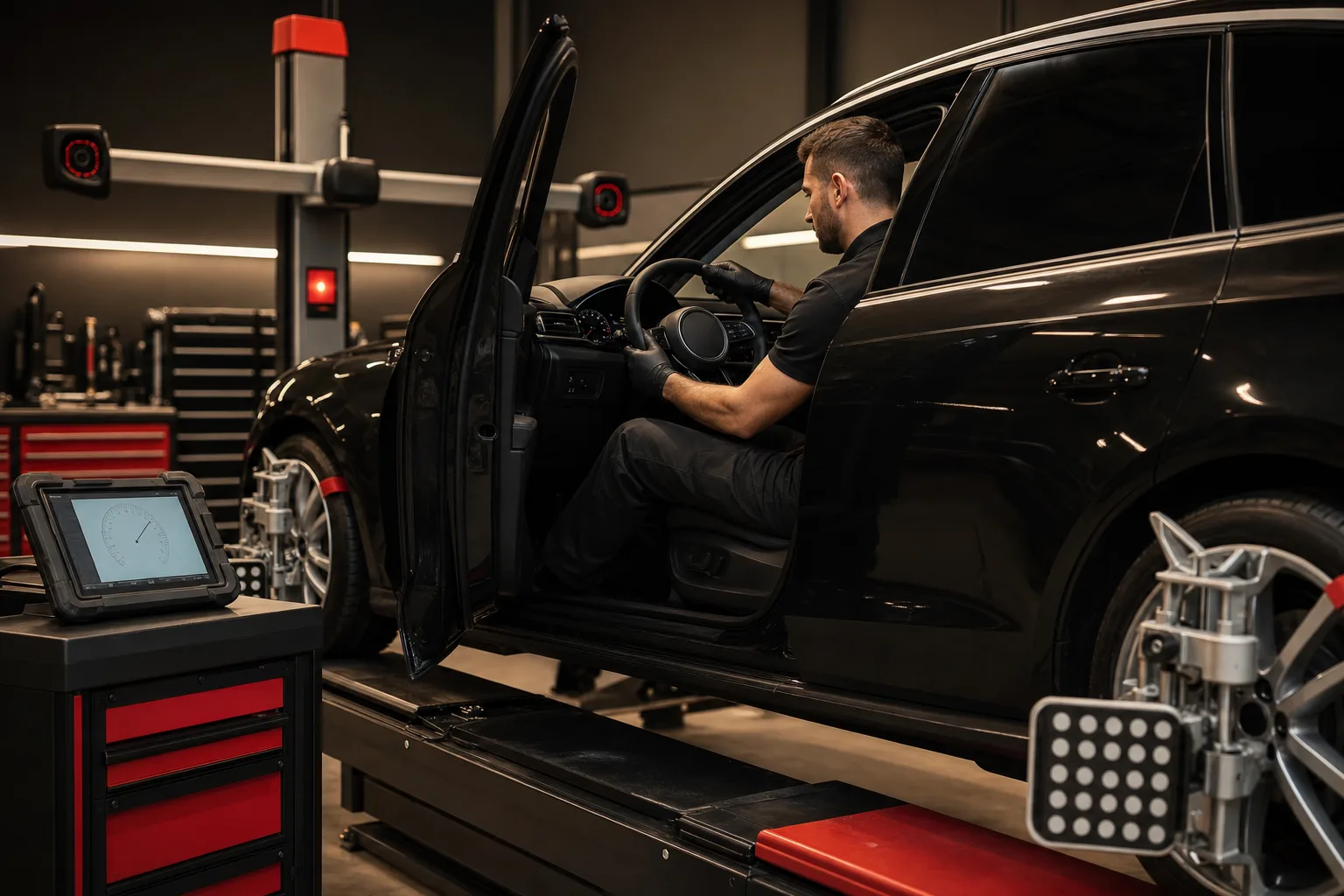
Alignment racks equipped with integrated angle measurement can verify that sensor output matches measured wheel position after calibration. Always confirm that the steering wheel spoke alignment matches the straight-ahead position before initiating the routine — setting zero with the wheel turned guarantees persistent fault codes and off-center driving feel.
Consequences of Skipping the Calibration Step
Leaving the sensor uncalibrated does not always produce an immediate warning. The vehicle may drive normally for weeks until a wet surface or sudden lane change triggers stability control with incorrect angle data. Intervention can feel abrupt — a single wheel grabbing while others roll freely — which is both unsettling and a sign that the system is working from bad information.
Skipped calibration also complicates future diagnostics. Phantom stability control codes lead technicians toward wheel speed sensors or yaw modules when the root cause is simply a missing zero-point reset after the last suspension job. Completing calibration at the end of every relevant repair closes that gap and restores the full safety net the vehicle was engineered to provide.
If you recently had alignment or front-end work and notice any of the symptoms above, ask whether steering angle sensor calibration was performed and documented. It takes minutes on the right equipment and prevents problems that are far harder to trace after the fact.