The oil control valve, often labeled as a VVT solenoid on scan tools, regulates pressurized engine oil to the camshaft phasers that adjust valve timing. When the valve sticks open, closed, or responds slowly, timing commands from the engine control module no longer match actual cam position. Symptoms range from a faint tick at idle to full limp-mode operation — and prolonged mismatch accelerates wear on cam lobes, chain tensioners, and phaser internals.
How Variable Valve Timing Depends on the OCV
Modern engines advance or retard cam timing to balance power, emissions, and fuel economy across the rev range. The control module pulses the oil control valve to route oil into or out of the phaser chambers. A healthy valve opens and closes within milliseconds. A failing unit may respond intermittently, hold the wrong position, or fail to seal when de-energized, leaving the phaser stuck at an extreme angle.
Because the valve sits in the hottest part of the engine and bathes in oil that carries combustion byproducts, carbon deposits and varnish are the most common failure mechanism. Low oil level, extended oil change intervals, or the wrong viscosity grade increase the likelihood of sticking.
Symptoms That Point Toward a Sticking Valve
Drivers often report a rhythmic ticking at idle that disappears above two thousand rpm, or a rough idle that smooths out once the engine warms. Power loss under load, hesitation during acceleration, and increased fuel consumption can follow. On cold mornings, the engine may run poorly until oil pressure builds enough to move a partially stuck plunger.
- Check-engine light with codes referencing camshaft timing, bank-specific VVT performance, or slow response
- Rattling from the valve cover area that changes with engine speed
- Idle speed hunting or stalling when the air conditioning compressor cycles on
- Failed emissions test due to elevated hydrocarbons at idle
These symptoms overlap with stretched timing chains, worn phasers, and low oil pressure. That is why confirming the valve before replacing larger components saves both time and unnecessary parts expense.
Reading Scan Data and Command Response
A capable scan tool displays commanded versus actual cam angle for each bank. Watch the delta while the engine transitions from idle to a steady two-thousand-rpm hold. A healthy system keeps the error within manufacturer limits — typically a few degrees. Persistent deviation on one bank, especially when the other bank tracks correctly, narrows suspicion to that side's valve, wiring, or phaser.
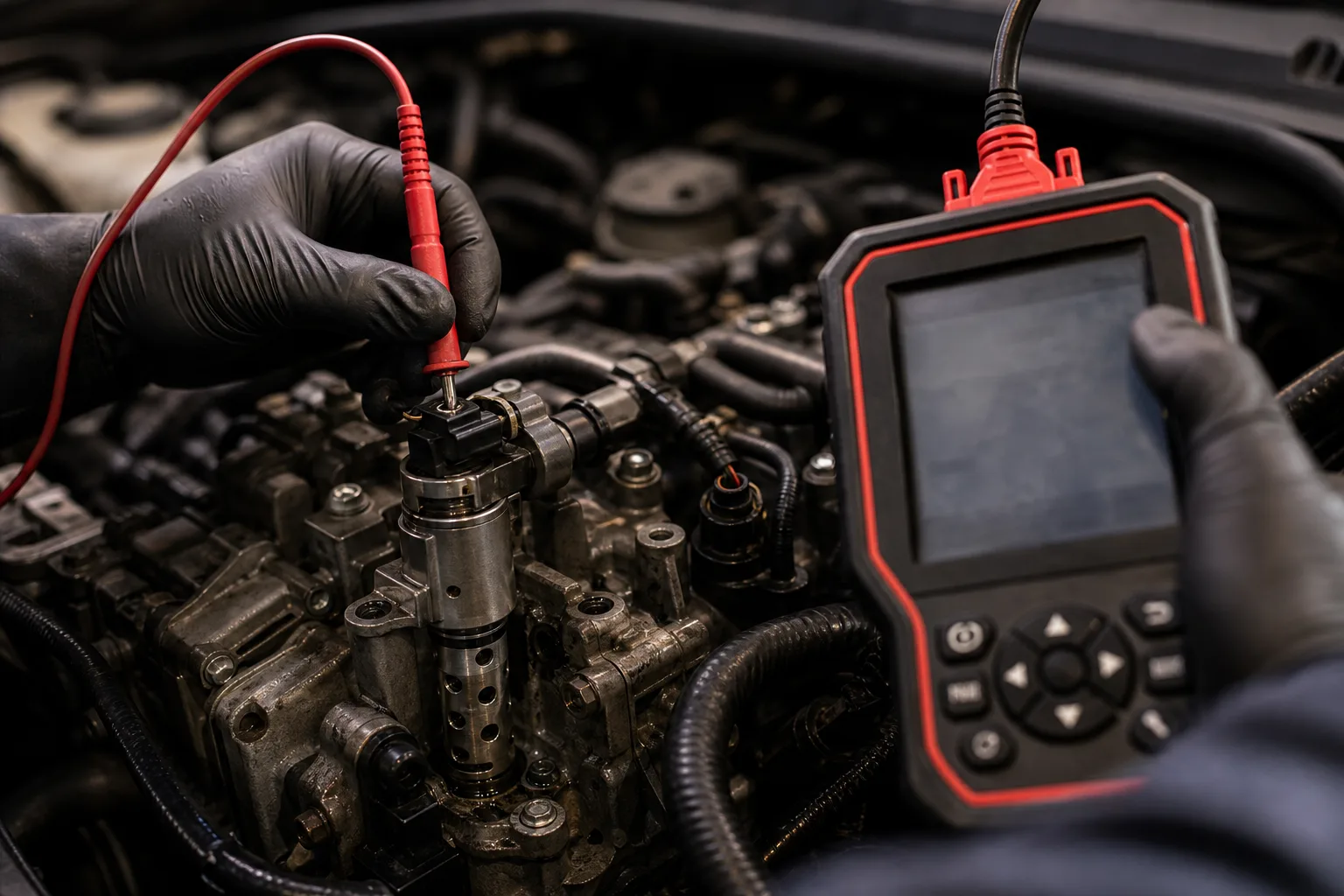
Bi-directional testing lets you command the valve on and off while monitoring cam position change and listening for an audible click at the solenoid. No movement or a delayed response after a clean command strongly implicates the valve or its oil supply gallery. Compare resistance readings and supply voltage at the connector against service specifications before condemning the solenoid itself.
Mechanical Tests Without Advanced Equipment
With the engine off and oil cool, remove the suspect valve and inspect the screen filter on the inlet port. Metal debris or thick sludge means downstream damage may already be underway. Clean the screen if the valve body otherwise looks intact, but never reuse a valve that feels gritty or binds when pushed manually.
Apply battery voltage briefly to the solenoid terminals and confirm the plunger snaps decisively in both directions. Intermittent operation at the bench mirrors what happens on the engine. If a replacement valve restores normal idle and scan data immediately, you have confirmed the diagnosis without opening the timing cover.
Repair Timing and Preventing Secondary Damage
A sticking oil control valve is not a monitor-only fault. Continued operation with incorrect cam timing increases load on the timing chain, wears phaser lock pins, and can score camshaft journals. Address the issue as soon as codes become active or symptoms appear consistently — not after the next scheduled service.
Replacement valves are relatively inexpensive compared with phaser or camshaft work. Pair the repair with an oil and filter change using the manufacturer-specified viscosity. If metal appears on the inlet screen, plan a deeper inspection of the timing system before assuming the valve swap alone resolves the problem.
Document before-and-after scan data so you can verify cam tracking returned to specification. A follow-up drive cycle should clear pending codes if no other faults remain. Early intervention at the valve stage protects the expensive hardware downstream and restores the fuel economy and smoothness the engine was designed to deliver.