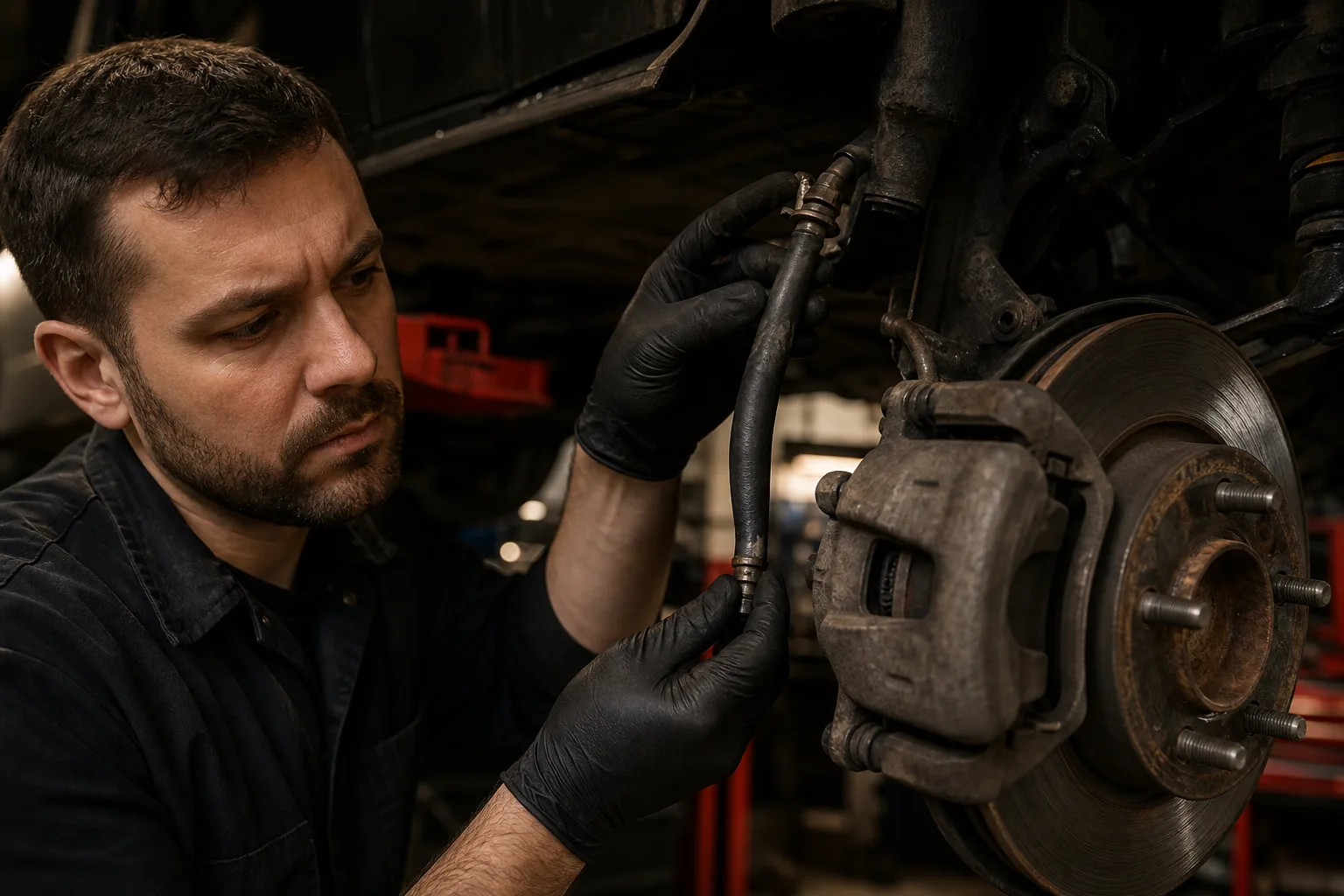
Flexible brake hoses connect the rigid steel lines on the chassis to the calipers or wheel cylinders at each corner. They must flex with suspension travel while holding hydraulic pressure under hard braking. Over time, the inner rubber liner breaks down, outer jackets crack, and corrosion attacks the crimped fittings. Most failures give weeks or months of warning before a hose ruptures — if you know what to look for.
Why Flexible Hoses Fail Before Steel Lines
Steel brake lines run along the frame and rarely move. Flexible hoses, by contrast, bend every time the wheels travel over bumps and absorb steering input at the front axle. Constant flexing fatigues the rubber compound. Heat from the brakes accelerates aging, and road salt or brake fluid seepage corrodes the metal end fittings.
Internal deterioration is the most dangerous pattern because the outer hose can look acceptable while the inner wall has separated or collapsed. When that happens, the hose expands under pressure instead of transferring force to the caliper piston. Braking efficiency drops even though nothing appears wrong at a casual glance.
Changes in Pedal Feel and Response
A soft or spongy pedal that returns after bleeding the system often points to a hose that balloons under pressure. You may also notice the pedal sinks slightly when you hold steady pressure at a stoplight, then firms up when you release and reapply. That creeping travel suggests fluid is displacing into a weakened hose wall rather than holding the piston position.
- Pedal travel increases without a corresponding drop in fluid level
- Braking feels normal during light stops but fades under repeated hard applications
- One corner locks up or drags after braking, indicating uneven pressure delivery
- Fresh fluid and a proper bleed do not restore a firm pedal
Always compare pedal behavior before and after service. If a hose was disturbed during other work and the pedal changed character, inspect that corner first.
Visible Swelling, Cracking, and Surface Damage
With the vehicle safely supported and the wheels removed, trace each hose from the frame bracket to the caliper. Look for bulges, blisters, or areas that appear larger than the rest of the hose length. Those swellings often expand only under pressure, so have an assistant apply moderate pedal force while you watch — but keep hands and body clear of rotating components.
Surface cracks in the outer cover, especially near the crimped ends, allow moisture to reach the reinforcement braid. Chafing marks from contact with suspension parts or sharp brackets indicate the hose has been rubbing for some time. Any hose that shows exposed reinforcement wire or weeping fluid at a fitting requires immediate replacement on that corner at minimum.
Moisture Contamination and Corrosion at the Fittings
Brake fluid is hygroscopic — it absorbs water from the atmosphere over time. Contaminated fluid corrodes the inside of hoses and fittings from within, while external rust at the banjo bolt or crimp suggests the seal between rubber and metal has been compromised. A greenish or milky residue around a hose end is a strong indicator that replacement is overdue.
When replacing hoses, flush the affected circuit and consider a full fluid exchange if the vehicle has gone years without service. Installing new hoses onto a system filled with degraded fluid shortens their service life and can leave air trapped in high points of the routing.
When to Replace and What to Expect During Service
Most manufacturers do not publish a fixed interval for flexible hoses, but industry practice treats ten years or any visible defect as a replacement trigger — whichever comes first. Vehicles in coastal climates or those that see track days may need hoses sooner because heat cycling and salt exposure accelerate damage.
Professional replacement includes new crush washers, proper torque on banjo fittings, and a complete bleed of the affected circuit. Hoses should always be replaced in matched sets per axle when one shows significant wear, because the others on that axle typically share the same age and environment. After service, verify pedal height, test stopping performance at low speed in a safe area, and recheck for leaks once the system has been exercised.
Catching a deteriorating hose during routine inspection costs far less than recovering from a sudden loss of braking pressure on the road. If any of the signs above match what you are experiencing, schedule a hands-on inspection before the next long drive.