A vacuum leak lets unmetered air enter the intake downstream of the mass airflow sensor. The engine control module calculates fuel delivery based on measured air volume, so any air that bypasses the sensor creates a lean mixture the computer did not command. The result is unstable idle, hesitation, and diagnostic trouble codes that sometimes point at oxygen sensors or fuel trim instead of the real source.
What Happens When Unmetered Air Enters the Intake
Under normal operation, every gram of air passing through the throttle is measured and matched with a corresponding fuel quantity. A leak introduces extra oxygen that the sensors detect as a lean condition. The module adds fuel through short-term trim adjustments, but large or rapidly changing leaks exceed the correction range.
Small leaks often affect idle most severely because manifold vacuum is highest at closed throttle. Larger leaks become noticeable under load as well, producing surging or stumbles during acceleration. Because the symptoms mimic failing sensors or clogged injectors, understanding the behavioral pattern saves hours of misdirected parts replacement.
Idle Behavior and Engine Speed Hunting
The most recognizable sign is an idle that wavers between high and low rpm without touching the accelerator. You may hear the engine speed rise and fall rhythmically, or feel vibration through the steering wheel and floor pan at a stop. Cold-start idle may settle briefly, then become unstable once the engine transitions off the fast-idle strategy.
- Rough idle that improves slightly when you lightly tap the throttle
- Stalling when coming to a stop or when the transmission engages drive from neutral
- Idle speed higher than normal after the engine reaches operating temperature
- Noticeable improvement when the engine is cold, worsening as heat-soaked gaskets soften and leak more
Leaks at the brake booster hose or PCV circuit can also affect pedal feel or produce a hissing sound inside the cabin when the brake pedal is depressed. Those clues narrow the search area before any tools come out.
Sounds and Smells That Suggest a Leak Path
With the hood open and the engine idling, listen for a high-pitched hiss or whistle near the intake manifold, throttle body, or vacuum hose connections. The sound often changes when you spray a small amount of water or carburetor cleaner around a suspected joint — a brief smoothness in idle indicates the spray momentarily sealed the gap.
A lean condition from a significant leak can produce a sharp exhaust odor at idle because unburned oxygen raises combustion temperatures. You might also notice a faint fuel smell as the module enriches the mixture in an attempt to compensate. Neither smell confirms a leak by itself, but together with unstable idle they strengthen the case for intake tract inspection.
How the Vehicle Responds Under Load
Vacuum leaks are not idle-only problems. Under acceleration, unmetered air disrupts the air-fuel ratio precisely when the engine demands the most consistent mixture. Drivers describe a flat spot just off idle, a hesitation when merging, or a feeling that the engine catches and then surges. Turbocharged engines may show boost fluctuations or enter limp mode when the leak is large enough to corrupt mass airflow readings.
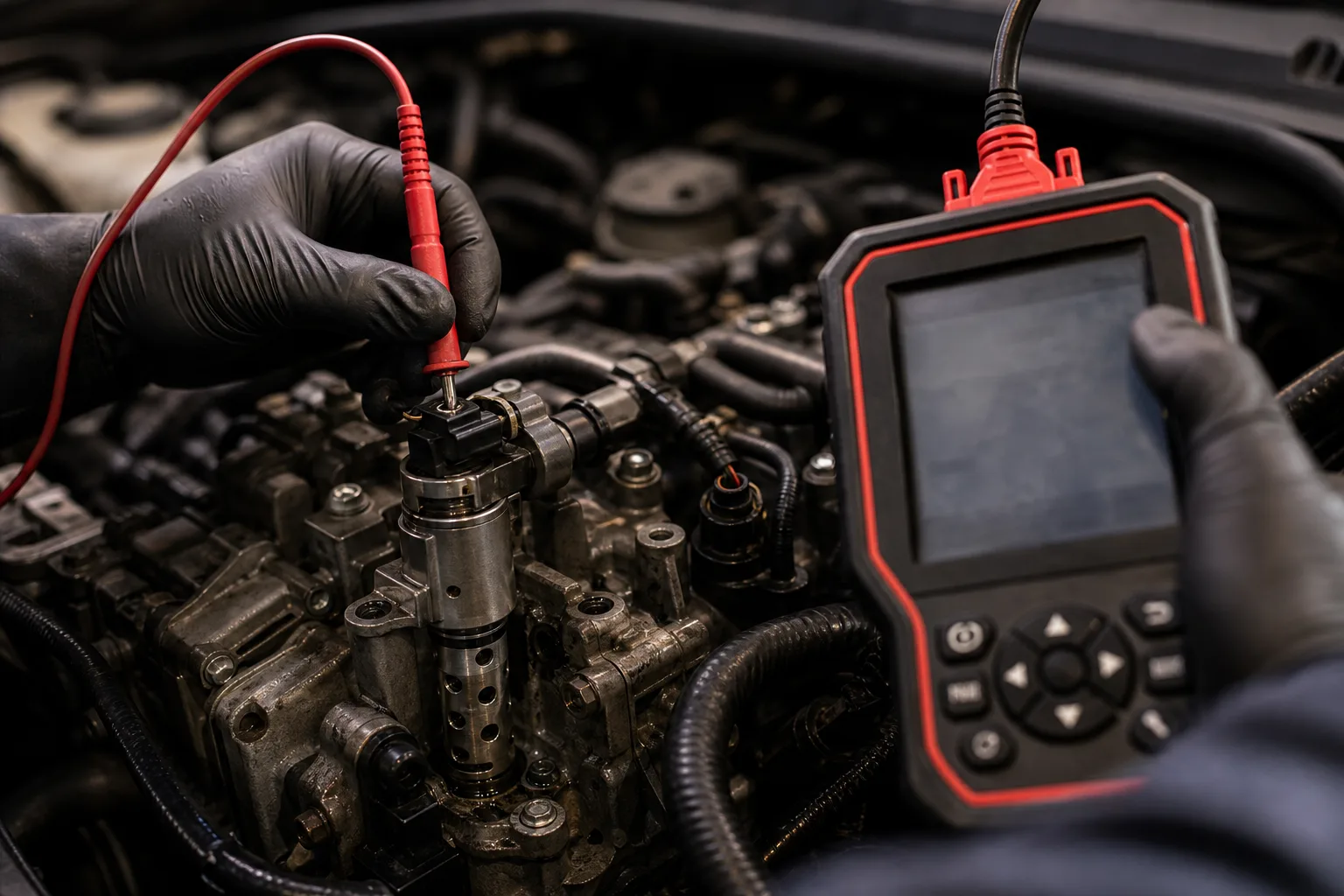
Long-term fuel trim data on a scan tool often shows positive correction values at idle that drop at higher rpm when manifold vacuum decreases and the leak influence shrinks. That pattern — lean at idle, closer to normal under cruise — is a classic vacuum leak signature worth checking before replacing oxygen sensors or the mass airflow unit.
Common Leak Locations and Next Steps
Inspect the obvious points first: cracked vacuum hoses, deteriorated intake manifold gaskets, loose throttle body bolts, and disconnected PCV or purge valve lines. After recent work, check whether a hose was left off or a gasket shifted during reassembly. Plastic intake manifolds on newer engines develop cracks near the stress points around the EGR port or throttle flange.
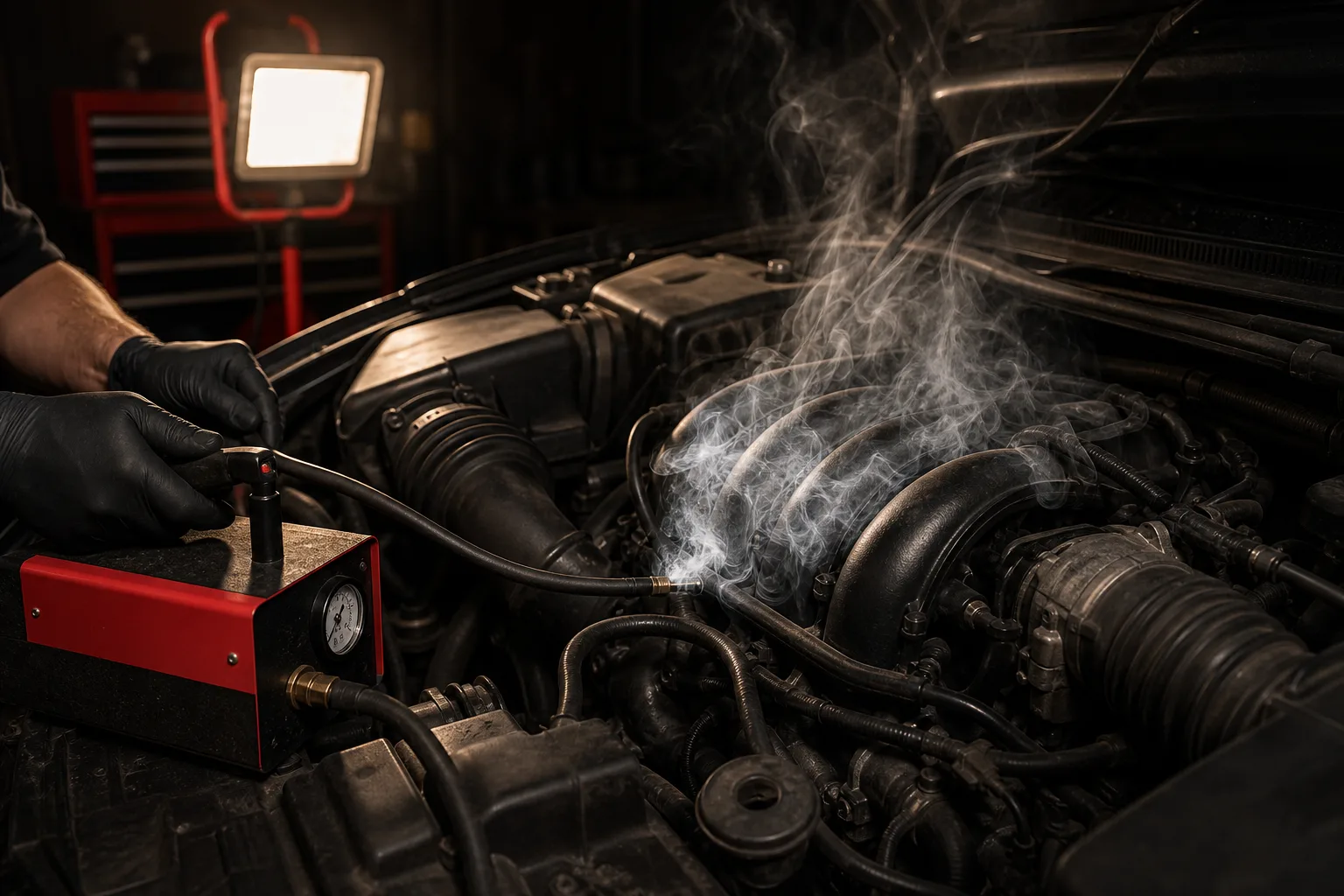
When visual inspection and symptom testing narrow the area but not the exact joint, a smoke test or ultrasonic leak detector provides confirmation without guesswork. Replace all degraded hoses in the affected circuit rather than patching a single cracked segment, because neighboring sections usually share the same age and material condition.
Clearing codes and verifying fuel trim return to normal after repair confirms the leak was the root cause. If symptoms persist, the leak was either not fully sealed or a secondary issue masked by the original fault. Document trim values before and after repair so you can verify the engine is running on measured air once again.